GEO vs SEO vs AEO: What's the Difference?
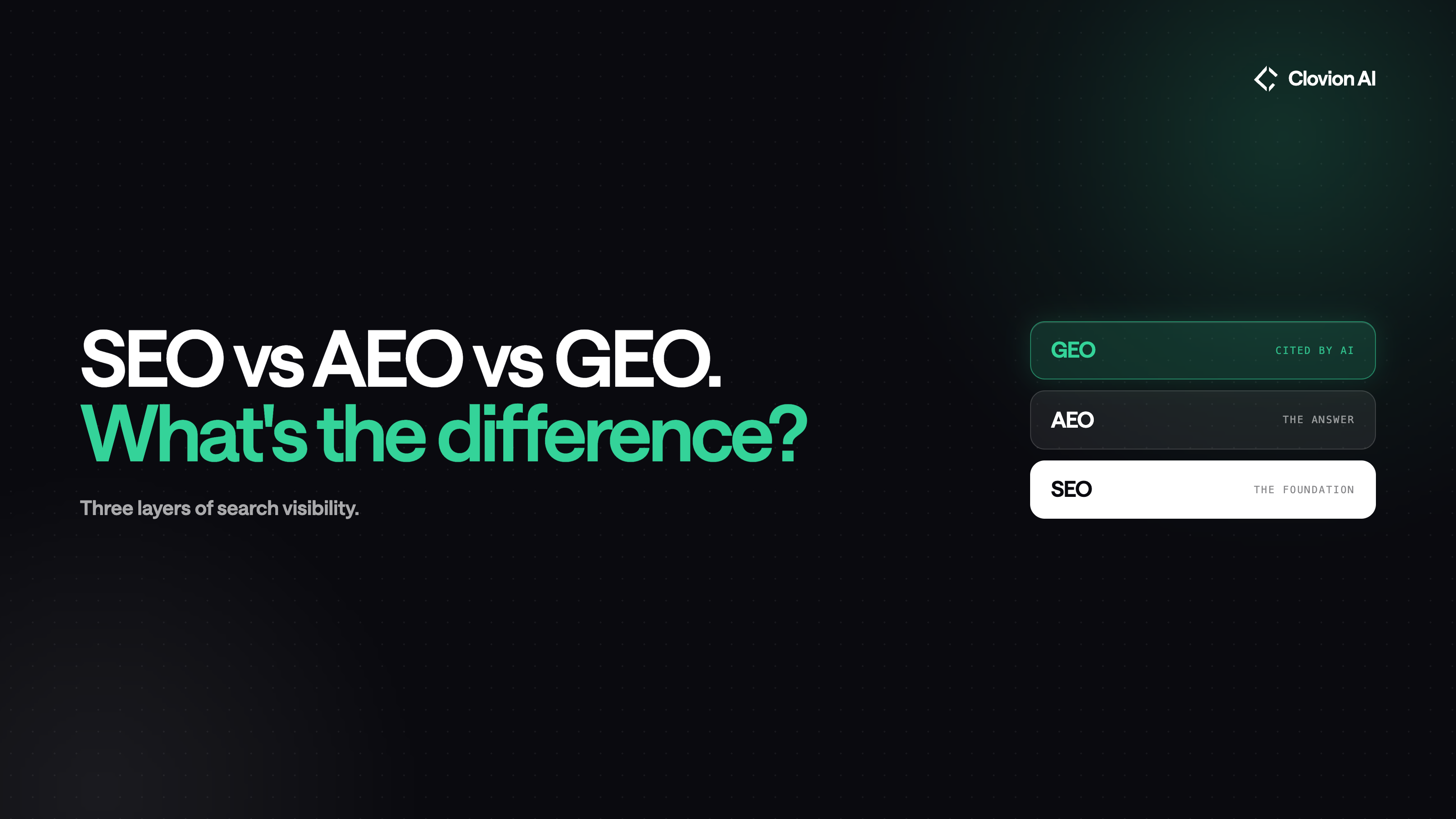
SEO, AEO, and GEO all help people find you, but on different surfaces. SEO (Search Engine Optimization) helps you rank in a list of links. AEO (Answer Engine Optimization) helps you become the direct answer to a question. GEO (Generative Engine Optimization) helps AI tools cite you in the answers they write. Most brands in 2026 need all three.
Search is no longer just a list of blue links.
People still use Google. They still compare websites. They still click through to pages. But they are also asking AI systems for direct answers, summaries, recommendations, and shortlists.
That is why marketers are now talking about three related but different concepts: SEO, AEO, and GEO.
SEO helps your website rank in traditional search results. AEO helps your content become the direct answer to a question. GEO helps your brand appear, be cited, and be understood correctly in generative AI responses.
They are not replacements for each other. They are layers of the same visibility problem.
Key takeaways
SEO ranks you in a list of links. AEO makes you the direct answer. GEO gets AI to cite you in generated answers.
SEO drives clicks. AEO wins zero-click answers. GEO earns citations inside AI responses.
All three share one foundation: clear, credible, well-structured content.
AEO is faster and mostly on-page. GEO is slower and depends on authority and trust built over time.
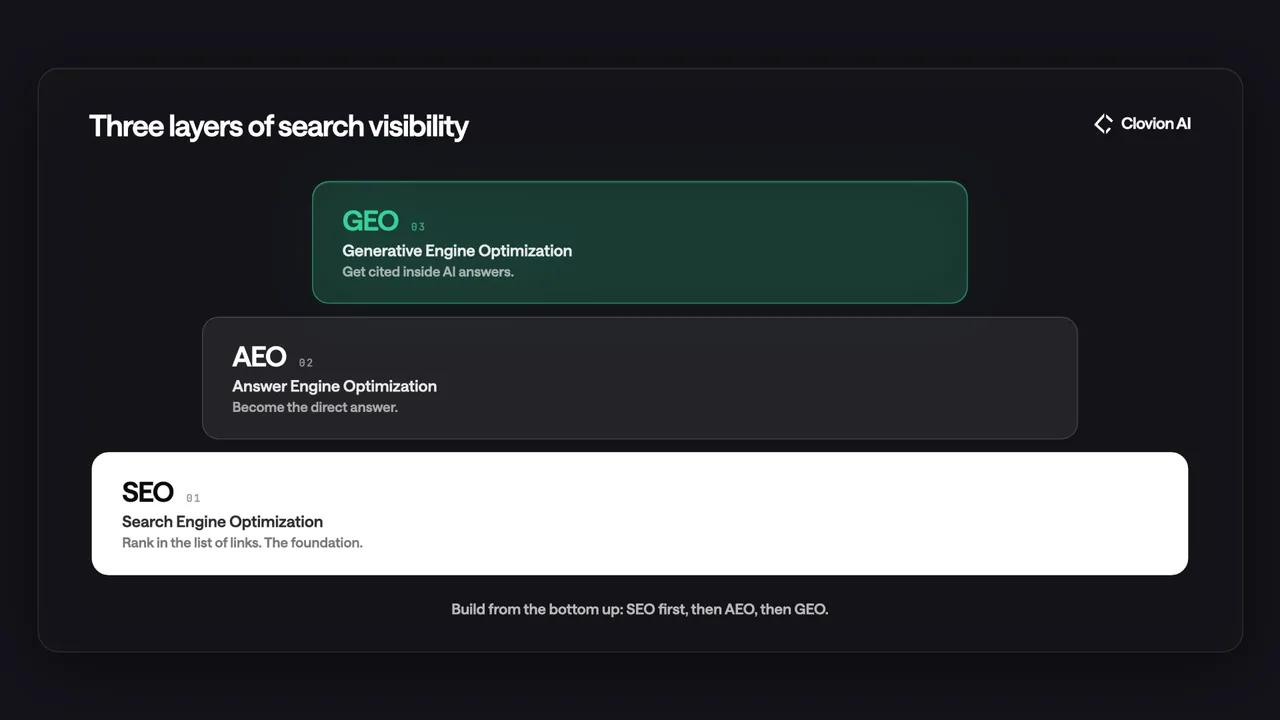
Most brands in 2026 need all three, layered in order: SEO first, then AEO, then GEO.
What do SEO, AEO, and GEO stand for?
SEO, AEO, and GEO are three related but different search disciplines. They share the same goal — being found — but they target different surfaces and measure success in different ways. Here is each one in a sentence.
SEO — Search Engine Optimization — the oldest of the three. It helps your pages rank in traditional search results, like the list of links on Google.
AEO — Answer Engine Optimization — it helps your content become the direct answer to a question. Think featured snippets, voice answers, and short AI replies.
GEO — Generative Engine Optimization — it helps AI tools like ChatGPT, Perplexity, and Google AI Overviews cite your content in the answers they generate.
SEO vs AEO vs GEO at a glance
The fastest way to tell them apart is by goal, surface, and how you measure success. The table below lines up all three across the points that matter most.
Dimension | SEO | AEO | GEO |
|---|---|---|---|
Goal | Rank on a results page | Be the extracted answer | Be named inside a generated response |
Surface | Google, Bing search results | Featured snippets, AI Overviews, voice | ChatGPT, Claude, Gemini, Perplexity |
Who/what decides | Search algorithm ranking signals | Answer-extraction model reading top page | Generative model synthesizing across many sources |
Core tactics | Keywords, backlinks, technical health, site structure | Direct answers up front, clear headings, structured data | Third-party mentions, factual consistency, earned citations |
Success metric | Ranking position, organic clicks | Snippet/Overview appearance, remaining clicks | Named-mention rate per engine, sentiment of the mention |
Goal | Rank on a results page | Be the extracted answer | Be named inside a generated response |
Surface | Google, Bing search results | Featured snippets, AI Overviews, voice | ChatGPT, Claude, Gemini, Perplexity |
What is SEO?
SEO is the practice of getting your pages to rank in traditional search results. It is the oldest and most established of the three. You use keywords, links, page speed, and helpful content to climb the results page.
The goal of SEO is a click. When your page ranks near the top and someone searches, they click through to your site. SEO still drives most web traffic today. It is the foundation the other two build on.
What is AEO?
AEO is the practice of getting your content chosen as the direct answer to a question. Answer engines pull one clean, short answer and show it on the spot. This includes Google featured snippets, voice assistants, and short AI replies.
AEO is answer-first. You structure content so a machine can lift a clear passage and use it. FAQ blocks, plain definitions, and question-based headings all help. The user often gets the answer without clicking. So AEO is about being the answer, not just ranking near it.
What is GEO?
GEO is the practice of getting AI tools to cite your content in the answers they generate. Generative engines like ChatGPT, Perplexity, and Google AI Overviews do not just pick one answer. They read across many sources, write a new answer, and name some of those sources.
GEO is about being one of the named sources. It rewards clear, specific, trustworthy content and strong brand signals across the web.
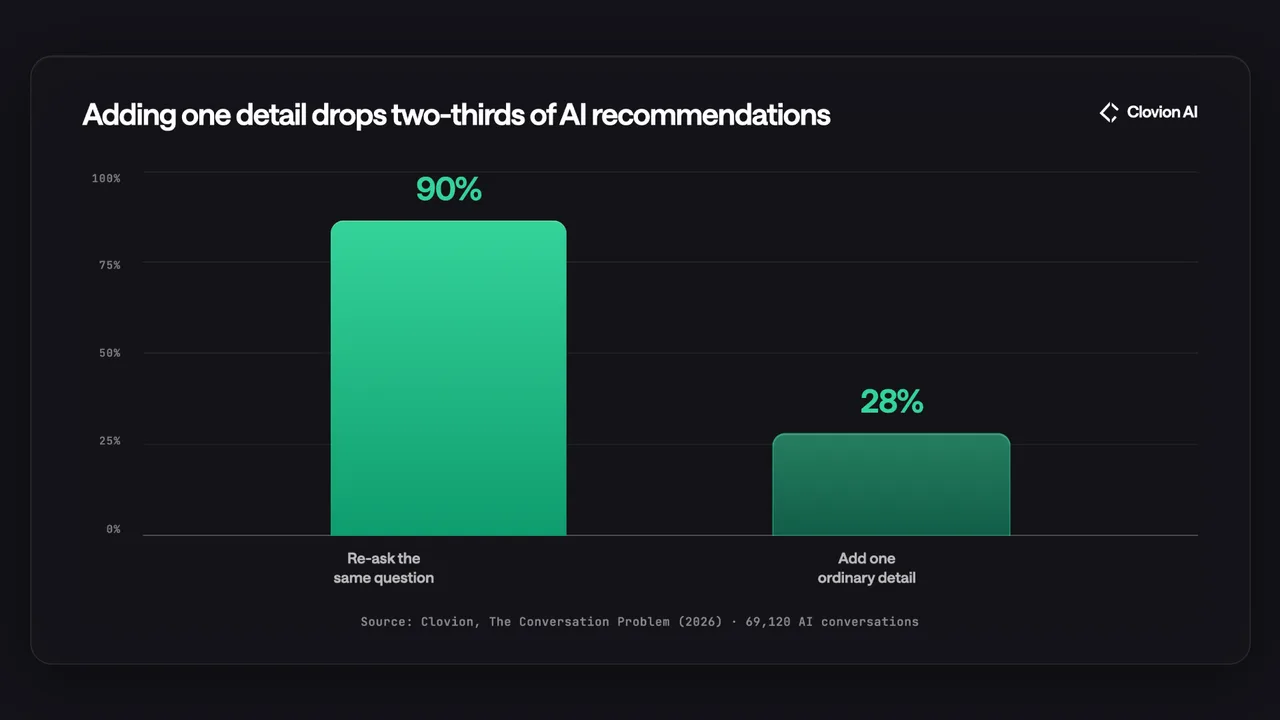
Specificity is what keeps you in an AI answer. A 2026 Clovion study of 69,120 AI conversations found that when a buyer added one ordinary detail to a follow-up question, only 28% of the recommended products survived. The ones cut first were described in broad terms, like “a popular choice.” The ones that stayed were tied to concrete fit: segment, price, features, or integrations. That is GEO in action.
How the Same Query Changes Across SEO, AEO, and GEO
Imagine someone searches:
“Best AI visibility tools”
In SEO, the goal is to rank a page for that keyword. You might create a comparison article, optimize the title tag, improve internal links, and earn backlinks.
In AEO, the goal is to answer the question clearly. You might add a concise definition, comparison table, FAQ section, and direct answer that explains what an AI visibility tool does.
In GEO, the goal is broader. You want AI systems to understand whether your product belongs in that recommendation set, who it is best for, what features it offers, how it compares to competitors, and why it should be included.
That means your website is only one part of the puzzle. AI systems may also draw signals from third-party mentions, reviews, comparison pages, forums, documentation, customer language, and public product information.
How to Optimize for SEO, AEO, and GEO Together
The best strategy is not to choose one. It is to build content that works across all three.
Start with SEO. Make sure your website is crawlable, technically healthy, and organized around topics your buyers actually search for.
Then apply AEO. Rewrite important sections so they answer direct questions clearly. Use headings that match buyer questions. Add concise definitions, comparisons, and FAQs.
Then layer in GEO. Make your brand easier for AI systems to understand. Be specific about who you serve, what you do, what you integrate with, what segments you fit, and how you compare to alternatives.
A practical workflow looks like this:
Build the SEO foundation
Make sure your pages can be crawled, indexed, and understood.Structure content for answers
Add clear definitions, direct explanations, and question-led sections.Clarify your brand positioning
Spell out your use cases, customer segments, differentiators, and limitations.Strengthen third-party signals
Improve reviews, comparison mentions, customer stories, partner pages, and external references.Monitor AI visibility directly
Check whether AI assistants mention your brand, describe it correctly, and recommend it for the right buyer.
Final thoughts
SEO, AEO, and GEO are not rivals. They are layers of the same goal: being found and trusted wherever people search. The surfaces have simply multiplied. People now search in a list of links, in a snippet, and inside an AI answer.
The good news is that the core work is shared. Clear, specific, trustworthy content wins on every surface. Build that foundation first. Then structure it for direct answers, and earn the authority that makes AI cite you.
The names will keep changing. The principle will not. Be the clearest, most credible source on your topic, and the engines — old and new — will keep pointing people to you.
Reading is fine. Measuring is better.
Free score in 60 seconds. Enter your domain and see how the major AI engines mention you, which competitors appear, and where to improve.